
Now, what most people might think about solving a Rubik's Cube is, solve one side at a time. But that is not how you do it. We solve it layer-by-layer :

3rd Layer (Solved at last)
2nd Layer (Solved after the 1st Layer)
1st Layer (Solved very first)
3rd Layer (At top, Solved at last)
2nd Layer (In middle, Solved after the 1st Layer)
1st Layer (At bottom, Solved very first)
Once you are done with the last layer, you have solved the cube! This method of solving is beginner-friendly. So Now, let's dive into it. Before starting this tutorial, we recommend you to play around with your cube, so that you get a hang of it.
Knowing the pieces
You need to know about these different types of pieces because we will be using their reference in this tutorial.
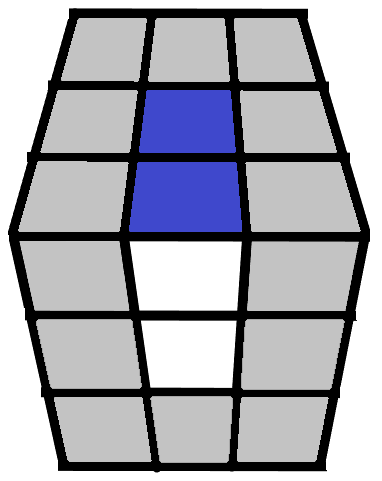
Edges (have 2 colours)
Edges (have 2 colours)
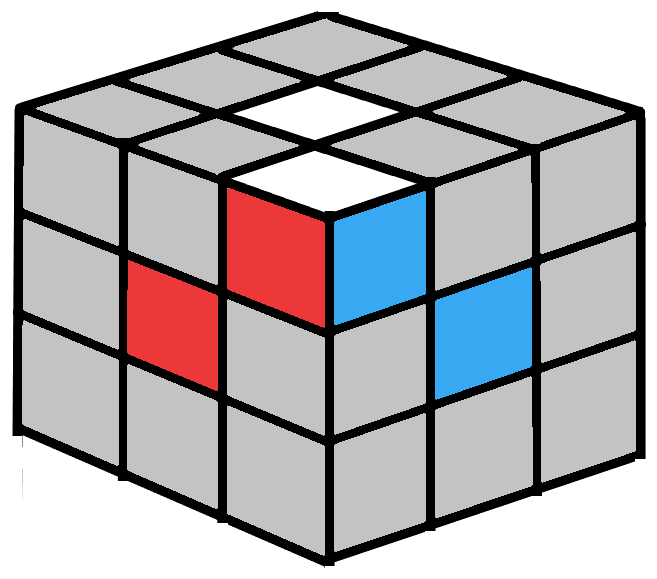
Corners (have 3 colours)
Corners (have 3 colours)
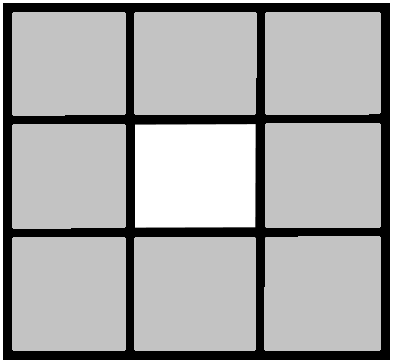
Center (at the center of each side)
Center (at the center of each side)
Center pieces do not move from their position. So, no need to solve them. You must have noticed this if you have played around with your cube.
Annotations must be learnt before starting this tutorial.
Solving the First Layer
The steps for solving the first layer are :
- Solve the cross.
- Solve the remaining corners.
Solving the Cross
What we mean by solving the 'cross' is :
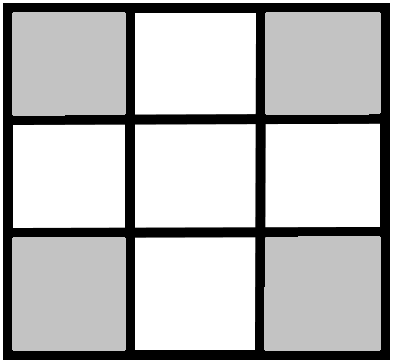
Solve these edges of the first layer
Solve these edges of the first layer
While solving the cross, keep in mind that that the side colours of the edges also must match the center on that side :
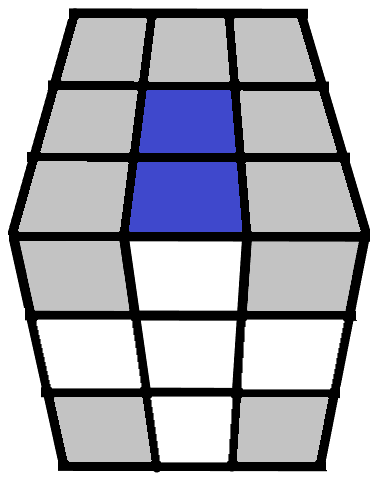
Also matching (side colour)
Matching (cross side)
Matching (white face, cross side)
Also matching (blue face, side colour)
In this tutorial, we will be using white as our cross colour. The 4 adjacent centers will be called side centers. The other colour of the edges (the colour which is not white) will be called the side-colour of that edge. We will be solving the first layer while keeping the white colour face on the downside (recognize white colour face by its center).
We recommend you to go ahead and try and solve the cross yourself!
The easiest way of solving the cross is solving the edges one by one.
To solve an edge :
- Bring the edge to the top layer such that its white colour is on top.
- Match its side colour with the side center of the same colour.
- Correct any previous edges you solved if it got moved in the previous 2 steps.
- Rotate the layer in which the edge is, so that its white colour also matches the white center.
For example :
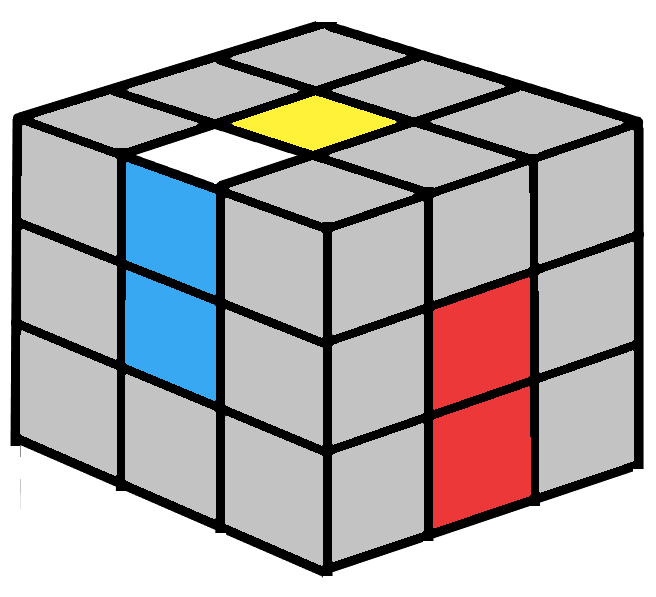
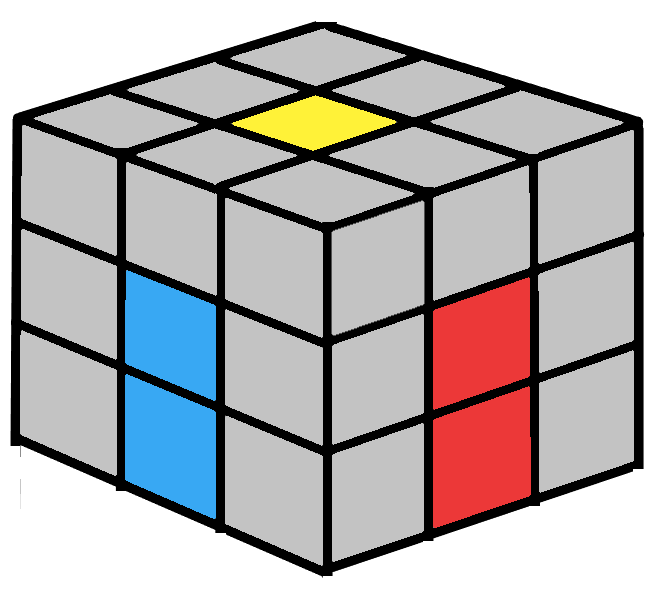
You can solve all the first-layer edges likewise, which means solving the cross! However, there are some special cases.
1. Edge piece already in the top layer, but with white NOT on top-
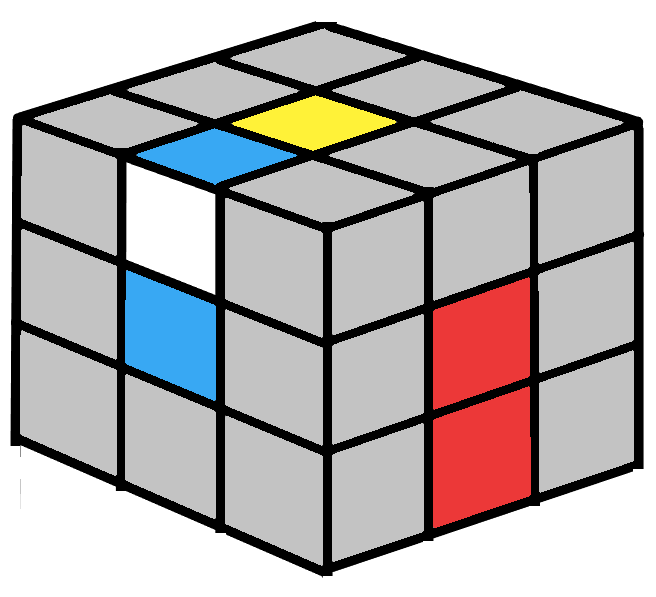
For this perform an algorithm-
U' R' F R
*Algorithms are sequence of moves which make a particular thing happen.
For this perform an algorithm-
U' R' F R
*Algorithms are sequence of moves which make a particular thing happen.
2. Edge piece in first layer itself, but with white colour NOT matching with the white center-
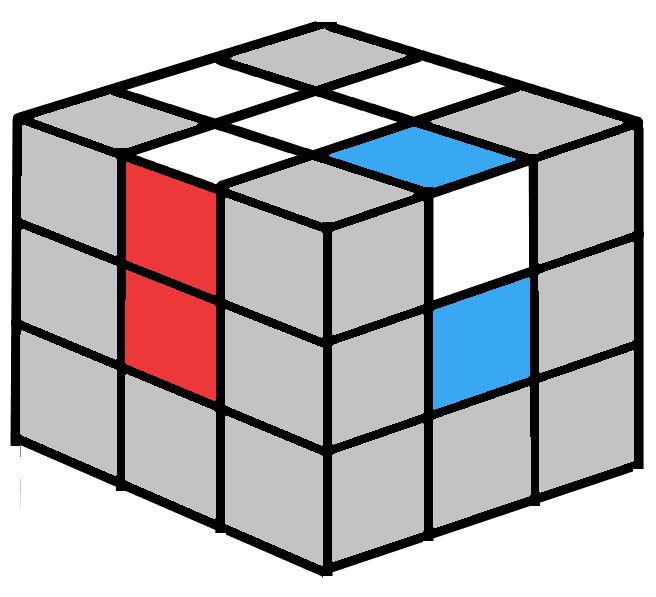
Just bring the edge in the top layer with a twice move. Then you have special case 1.
Just bring the edge in the top layer with a twice move. Then you have special case 1.
For the special case algorithm to work, the edge must be on top of the side center which matches with its side colour.
Solving the Corners
Now that we have solved the cross, we need to solve the remaining corners. Again, we will be solving the corners one by one. Here, the 2 colours in the corner which are not white will be called side colours. This one is pretty straightforward. There are 3 cases :
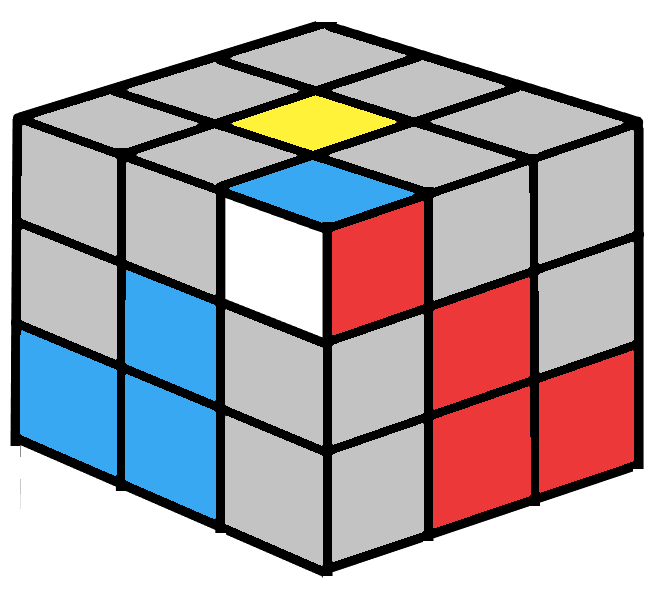
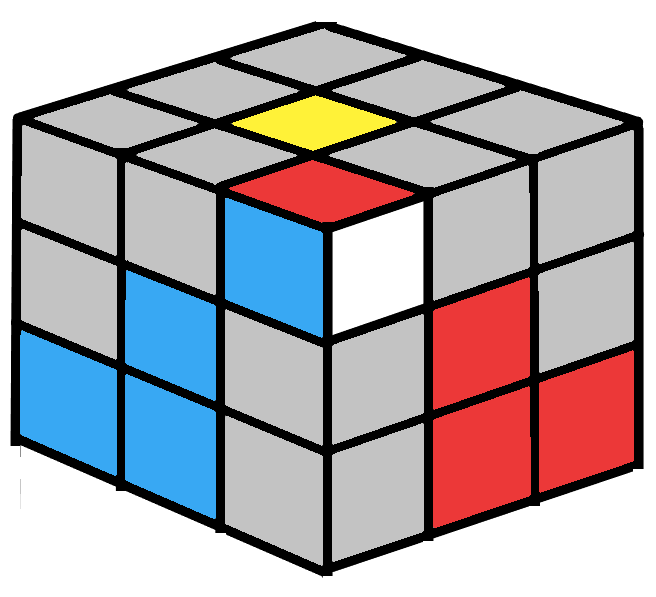
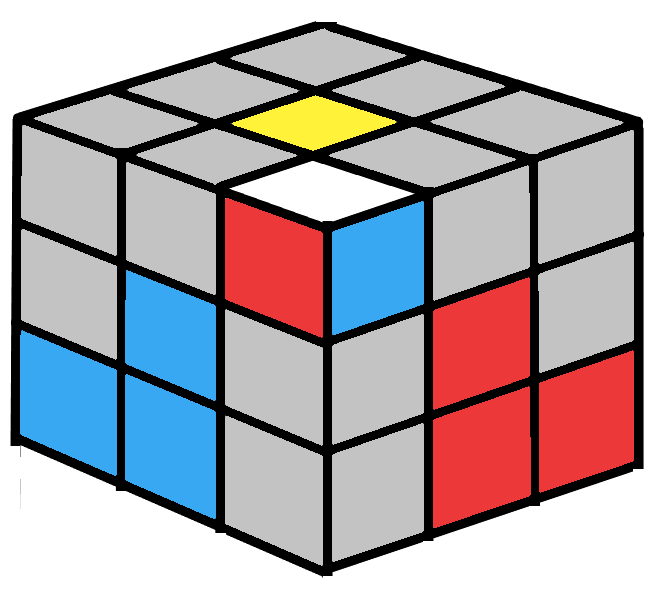
These algorithms will only work if the corner is in between the side centers which match its side colours. Also remember that these corners must be brought in the top layer first. If it is not in the top layer already, then :
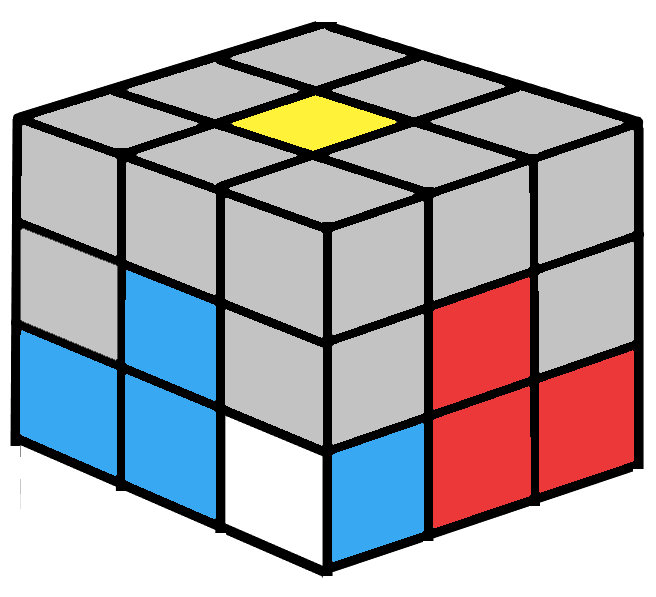
R U R'
These moves bring that corner in the top layer.
R U R'
These moves bring that corner in the top layer.
There you go; congrats on solving the first layer!
Solving the Second Layer
If you see the second layer, we only have the edges to solve (remember that centers stay in position, so no need to solve them). For the second layer, you just need to learn 2 algorithms.
To solve the edges, get the edge in the top layer, match its side colour (the colour NOT on top becomes the side colour) with the same side center, and then perform the algorithm needed to put it in place.
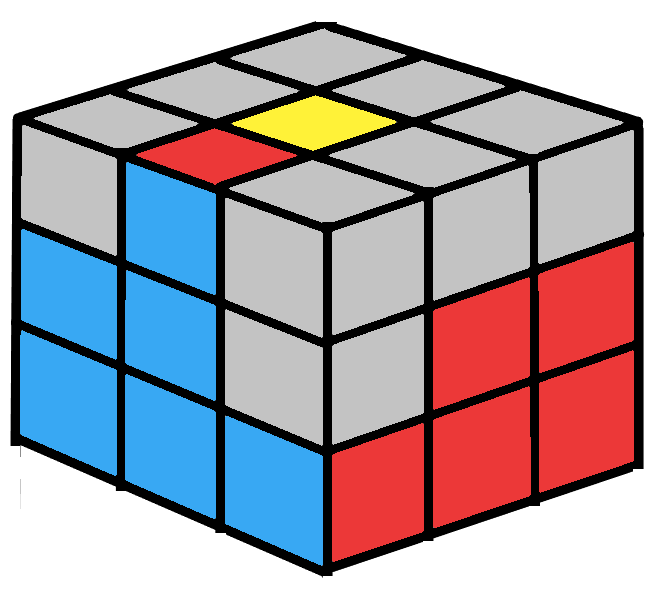
Case 1 : edge to be inserted in right side.
U R U' R' U' F' U F
Case 1 : edge to be inserted in right side.
U R U' R' U' F' U F
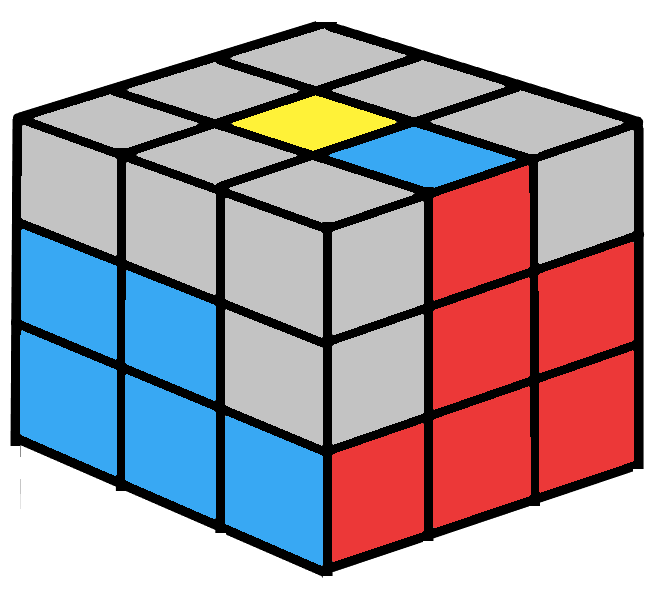
Case 2 : edge to be inserted in left side.
U' F' U F U R U' R'
Case 2 : edge to be inserted in left side.
U' F' U F U R U' R'
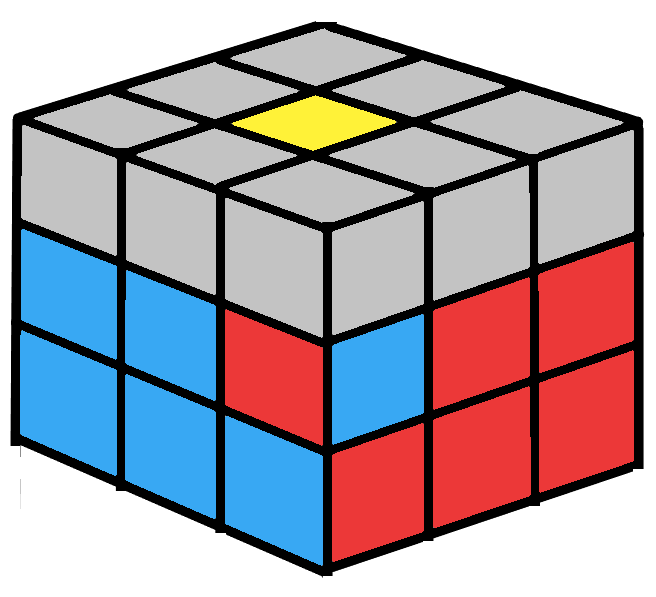
Case 3 : edge in the wrong slot.
You simply have to bring the edge in the top layer. For this, perform any one algorithm from case 1 or case 2. You will have the edge in the top.
Case 3 : edge in the wrong slot.
You simply have to bring the edge in the top layer. For this, perform any one algorithm from case 1 or case 2. You will have the edge in the top.
That's all for the second layer!
Solving the Third Layer
First, let's understand these cubing terminologies :
Orientation : Edges and corners can be rotated in their place in different ways. Bringing certain edges and/or corners in the correct rotation is called 'orientation'.
Permutation : Edges and corners can be placed in different places. Bringing certain edges and/or corners in the correct place is called permutation.
The steps for solving the third layer are :
- Orient the edges.
- Permute the edges.
- Permute the corners.
- Orient the corners.
All these steps are confined under algorithms. You just have to learn those.
Orienting the Edges
Orienting the edges basically means we will be making a cross on the top. There are 3 cases :
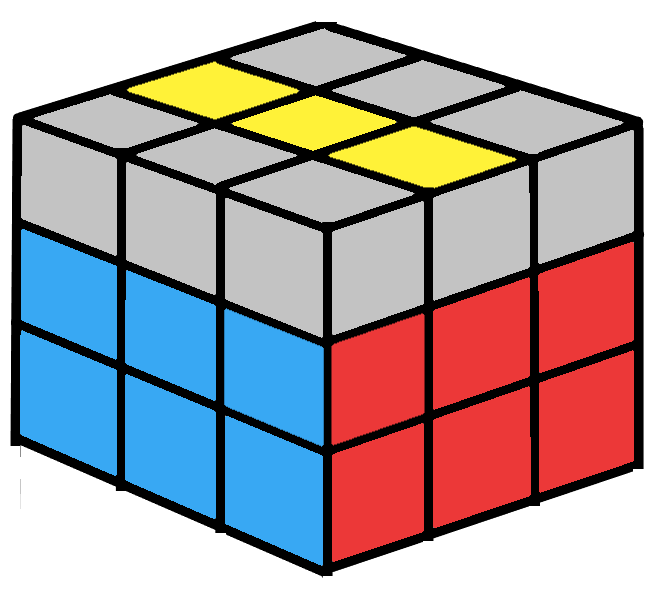
Case 1 : 2 oriented edges make a strip
F R U R' U' F
Case 1 : 2 oriented edges make a strip
F R U R' U' F
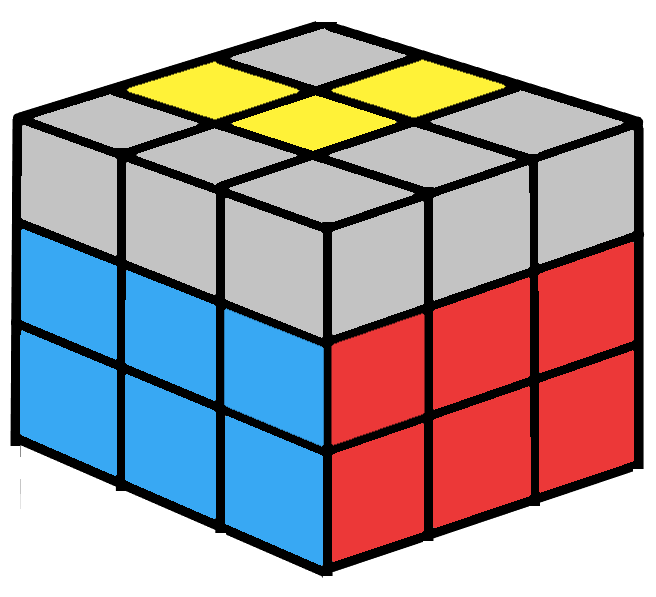
Case 2 : 2 oriented edges make an "L" shape
F U R U' R' F'
Case 2 : 2 oriented edges make an "L" shape
F U R U' R' F'
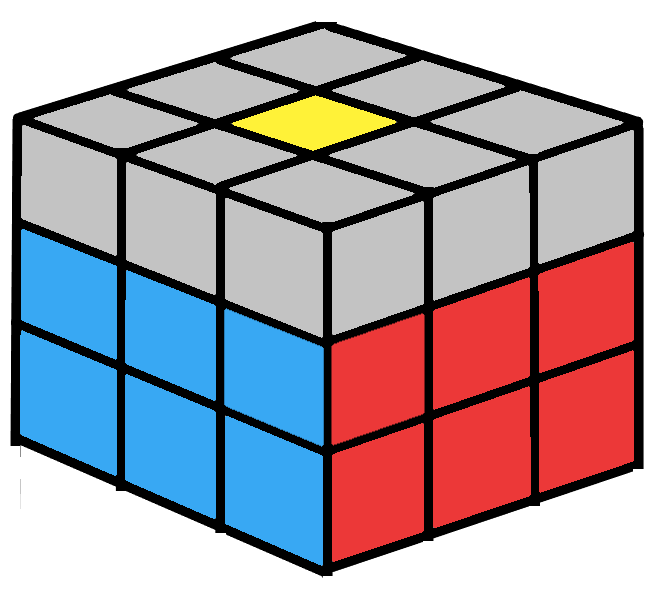
Case 3 : No oriented edges
Case 1 + U2 + Case 2
Case 3 : No oriented edges
Case 1 + U2 + Case 2
Permuting the edges
For permuting the edges, you just need to learn one algorithm.
First of all, you need to bring a situation. The situation is that only 1 edge is in the correct position, and the other 3 are not (the edge is in the correct position if its side colour matches its corresponding side center). If you do not find this situation, then rotate the top layer in all possible ways (There are only 4 possible ways, of course) and check for the situation. Once you find the situation, perform the following algorithm repeatedly until all the edges are permuted.
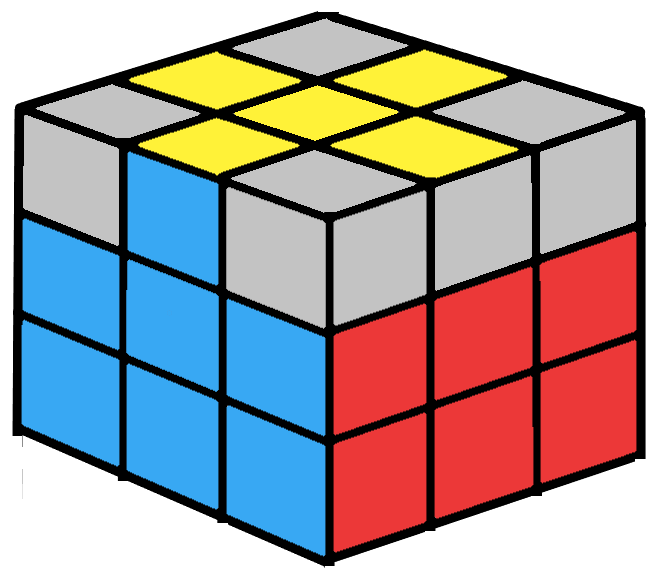
R U R' U R U2 R'
R U R' U R U2 R'
If you are still not able to find the above situation, then perform the above algorithm in any angle. Now rotate the top layer in all possible ways. You will now find the situation for sure.
Permuting the Corners
For this too, you just need to learn one algorithm.
First of all, find a situation in which only one corner is in the right place (recognize by thinking would the corner match its surroundings if it was twisted with yellow on top?) and the other 3 are not. Then perform the following algorithm repeatedly until all the corners are permuted.
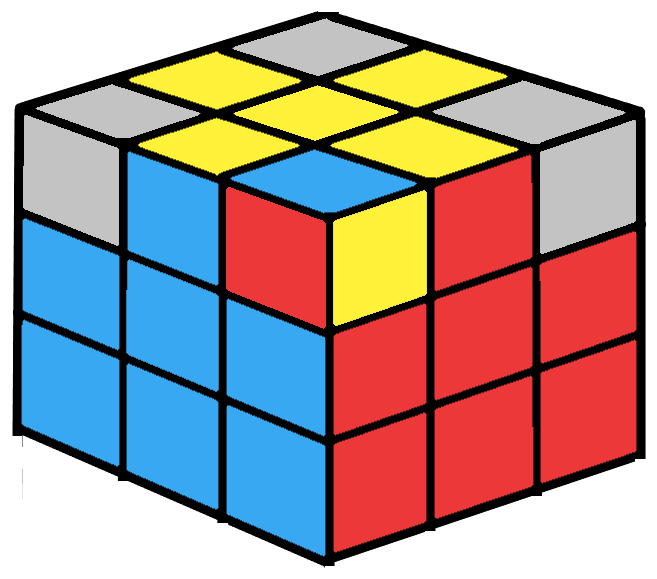
U R U' L' U R' U' L
U R U' L' U R' U' L
If you do not find the above situation, then do NOT rotate the top layer and check. Then just perform the above algorithm in any angle. You will have the above situation somewhere.
Orienting the Corners
For this step, just perform the following algorithm repeatedly until the corner gets permuted.
R' D' R D
R' D' R D
After the above algorithm, you will find that the rest of your cube has got scrambled. But don't worry; just rotate the top layer and bring the next unoriented corner to the above spot and do the above again. When you have oriented the last corner, the rest of your cube will get solved back again automatically. Now rotate the top layer to align the colours.
You are all set! You have solved the Rubik's Cube!
Give yourself a pat on the back and be proud of being one of the few people in the world who can solve the Rubik's Cube.